
Masculinity and Crisis in Early Modern Narrative Literature
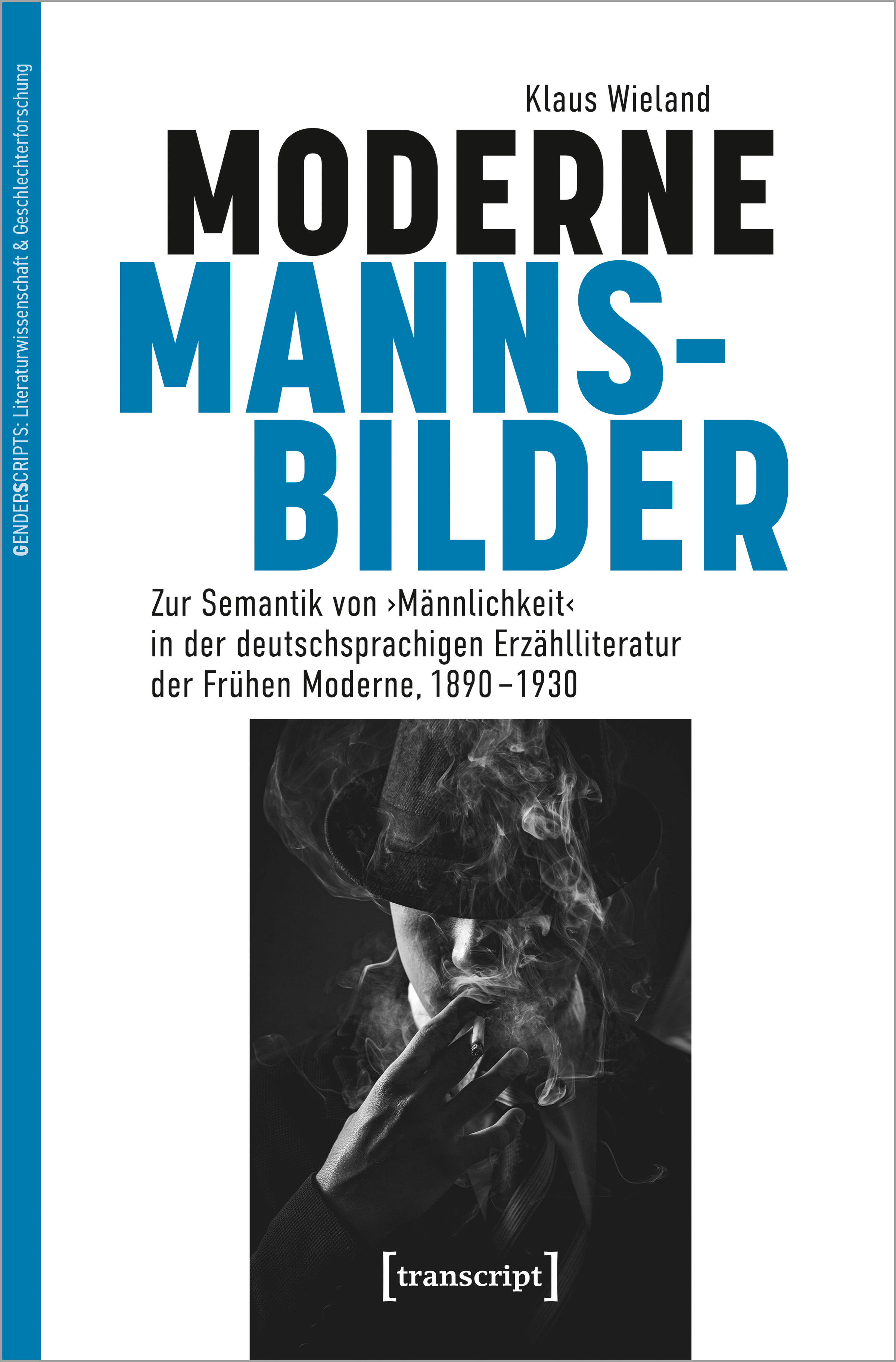
Klaus Wieland: Moderne Mannsbilder. Zur Semantik von ›Männlichkeit‹ in der deutschsprachigen Erzählliteratur der Frühen Moderne, 1890–1930. transcript 2024.
DOI:
https://doi.org/10.17169/ogj.2026.398Keywords:
Crisis, Masculinity, Modernity, LiteratureAbstract
Based on the observation that masculinity is less frequently addressed than femininity in current academic work on gender, Klaus Wieland sets out to examine the pluralisation of masculinities in narrative literature around 1900. This involves both the emergence of new male characters and the modernisation and transformation of old male types. The focus is clearly on representations and discourses rather than historical or social reality. In order to find out what becomes of hegemonic masculinity in the changing literary landscape of this era, the question is asked whether the emergence of alternative characters leads to a re-hierarchisation of values and thus to a lasting devaluation of hegemonic masculinity. And can this really be interpreted as evidence of the so-called ‘crisis of masculinity’? This is the starting point of this comprehensive study, which is based on a rich corpus of 76 works.
References
Connell, Raewyn [Robert W.] (1999): Der gemachte Mann. Konstruktion und Krise von Männlichkeiten. Opladen: Leske + Budrich. doi: 10.1007/978-3-663-09604-7
Hausen, Karin (1976): Die Polarisierung der „Geschlechtercharaktere“ – eine Spiegelung der Dissoziation von Erwerbs- und Familienleben. In: Conze, Werner (Hg.): Sozialgeschichte der Familie in der Neuzeit Europas. Stuttgart: Klett, 363–393. doi: 10.13109/9783666370250.19
Köppe, Tillmann (2007): Vom Wissen in Literatur. In: Zeitschrift für Germanistik 17(2), 398–410. doi: 10.3726/92117_398
Meuser, Michael (1998): Geschlecht und Männlichkeit. Soziologische Theorie und kulturelle Deutungsmuster. Opladen: Leske + Budrich. doi: 10.1007/978-3-322-95120-5
Wünsch, Marianne (1983): Das Modell der „Wiedergeburt“ zu „neuem Leben“ in erzählender Literatur 1890–1930. In: Richter, Karl/Schönert, Jörg (Hg.): Klassik und Moderne. Die Weimarer Klassik als historisches Ereignis und Herausforderung im kulturgeschichtlichen Prozess. Stuttgart: Metzler, 379–408. doi: 10.1007/978-3-476-03181-5_18
Downloads
Published
How to Cite
License
Copyright (c) 2026 Sibylle Goepper

This work is licensed under a Creative Commons Attribution 4.0 International License.
All contributions in Open Gender Journal are published under the Creative Commons Attribution 4.0 International license. You may freely make use of the corresponding texts in accordance to the conditions of the license (License contract, generally understandable version). There is no exclusive transfer of usage rights ("copyright transfer"). Open Gender Journal does not charge authors any costs for publication (so-called Article Processing Charges, APC) or submission (so-called Submission Charges). Authors are encouraged to share their contributions in other places, such as repositories.