
A Critical Reading of Global Citizenship Education: Colonial Continuities and Feminist Interventions
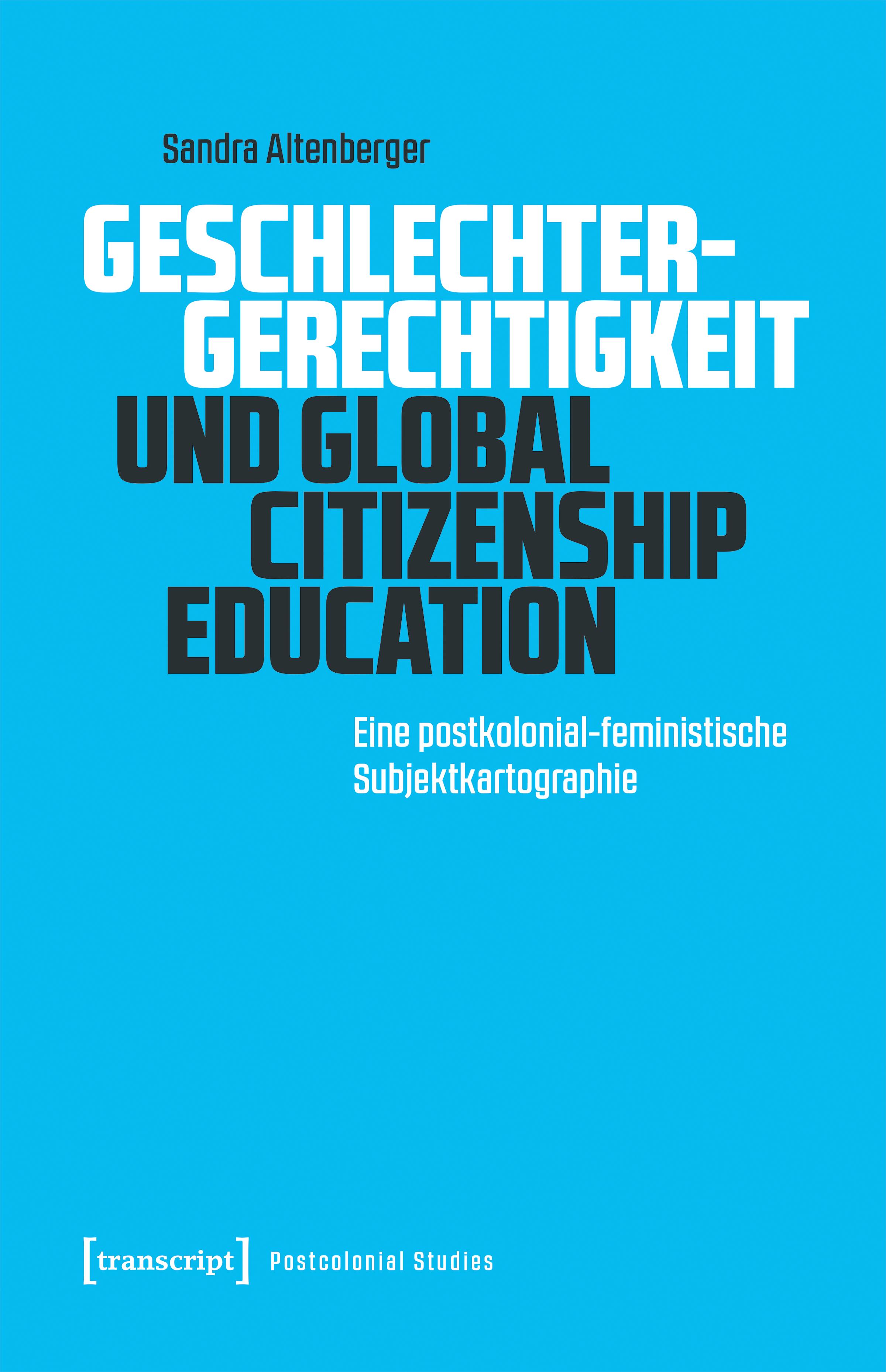
Sandra Altenberger: Geschlechtergerechtigkeit und Global Citizenship Education. Eine postkolonial-feministische Subjektkartographie. transcript 2025
DOI:
https://doi.org/10.17169/ogj.2026.456Keywords:
Education, Deconstruction, Discourse, Feminism, PostcolonialismAbstract
This review examines Sandra Altenberger's monograph “Gender Justice and Global Citizenship Education: A Postcolonial Feminist Subject Cartography”. It provides an overview of the book's theoretical foundations, methodological approaches, and key findings, situating the work within current scholarly debates. Drawing on a postcolonial feminist perspective, Altenberger investigates the extent to which colonial patterns of thought continue to shape concepts of Global Citizenship Education (GCE). Her central research question addresses how gendered subject positions are discursively produced within UNESCO's conceptualizations of GCE and how these processes are linked to the reproduction of colonial power relations. The study aims to render these dynamics visible and subject them to critical reflection while at the same time preserving the emancipatory potential of GCE. To this end, Altenberger seeks to unsettle established meanings and open up new spaces for thought and action.
References
Spivak, Gayatri Chakravorty (2012): An aesthetic education in the era of globalization. Cambridge, London: Harvard University Press.
Spivak, Gayatri Chakravorty (2008): Righting Wrongs. Unrecht richten [Übersetzung von Finck, Sonja/Keim, Janet]. Zürich, Berlin: diaphanes.
Downloads
Published
How to Cite
License
Copyright (c) 2026 Jutta Bichl

This work is licensed under a Creative Commons Attribution 4.0 International License.
All contributions in Open Gender Journal are published under the Creative Commons Attribution 4.0 International license. You may freely make use of the corresponding texts in accordance to the conditions of the license (License contract, generally understandable version). There is no exclusive transfer of usage rights ("copyright transfer"). Open Gender Journal does not charge authors any costs for publication (so-called Article Processing Charges, APC) or submission (so-called Submission Charges). Authors are encouraged to share their contributions in other places, such as repositories.